TLS Summer Sign Off and New Field Guide Series
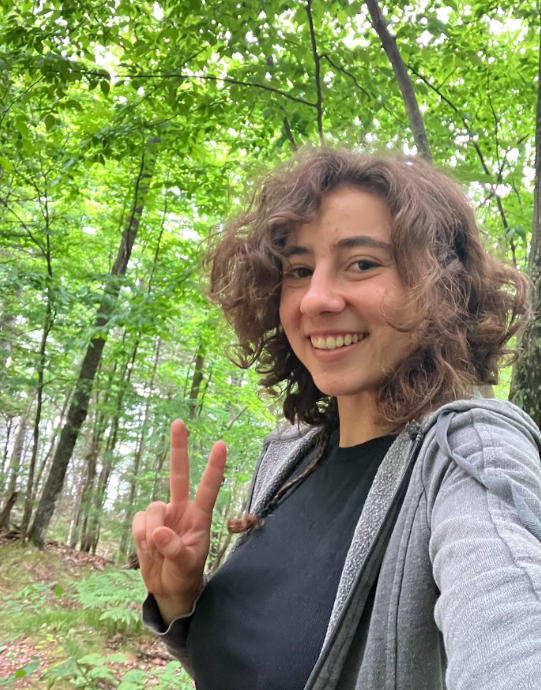
By Nalina Cherr– Can you believe it’s really almost the end of summer? I can hardly believe that this is the last day I will be typing at my desk in the bullpen at Trout Lake Station (TLS). Before I head out, I want to tell you about my independent project, and say a few words of thanks.
One of the hardest parts of my recent jobs as a science communicator is that everything is online now. Social media, articles, podcasts… communication has been, for the most part, digitalized. That gets hard when you spend eight hours a day at a desk, and even more so when you see your co-workers heading out every morning for a day in the field. I will admit that the resulting project is partially digitalized. There is a PDF version, and I designed it online. But a lot of the art came from notebook doodles and painting, and the final version is pretty hard to read unless you print it out, because half of it is upside down until you fold it.
My independent project is something I’m referring to as the “World’s Smallest Field Guide” series. It’s a collection of five “zines” (that’s short for magazine), each folded from a single sheet of paper. The series covers five key concepts related to TLS and limnology, and each of them represents different goals and communication needs.
This is a series of five zines. Each one is a four-page booklet, printable on any color printer. Most of them are double sided, but even if you can only print one side, there is plenty to read and do.
Please enjoy!
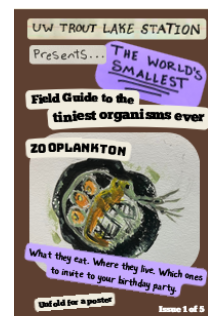
Issue One: The Word’s Smallest Field Guide to the Tiniest Organisms Ever
They’re underrated, underwater, undersized titans! Zooplankton, or “animal floaters,” are the tiny organisms that live in lakes and oceans. Written by “Holly the Holopodium,” this zine offers an insider view of the tiny inhabitants of the lake’s depths. It introduces some of the most common zooplankton, includes activities for kids and grownups alike, and includes some pretty cool art. The piece includes paintings of zooplankton by yours truly, and, if unfolded reveals a beautiful piece by Christina Weatherford (go ahead, print out an extra one for your wall). Click here for a printable PDF of Issue One.
Issue Two: The World’s Smallest Field Guide to Science
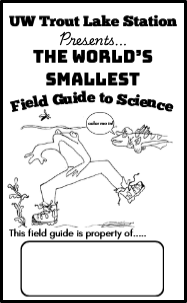
Every kid needs their own scientist notebook. This issue, written by “Shirley Dew Sighence,” includes instructions on how to make bagged ice cream and invisible ink and lots of space for kids to write and draw their observations. If they run out of space, there are also instructions on how to fold a new notebook. All you need is a sheet of paper and a pair of scissors! Click here for a printable PDF of Issue Two. (P.S. This issue can be folded inside out! Shhhh don’t tell anyone.)
Issue Three: The World’s Smallest Field Guide to Aquatic Plants
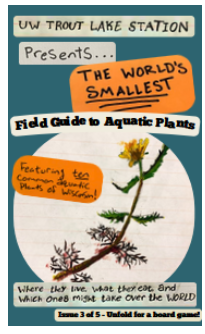
Aquatic plants might just seem like vague shadows under the water, but they’re incredibly diverse and important. This issue includes a guide to some of the most common aquatic plants in Wisconsin (verified by aquatic plant biologist Susan Knight), plus information on how to stop the spread of invasive plants. It also unfolds into a board game that you can play with rocks or stale bread chewed into scotty dogs… fun for the whole family! Click here for a printable PDF of Issue Three.
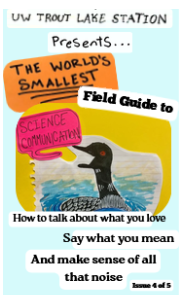
Issue Four: The World’s Smallest Field Guide to Science Communication
Communication goes both ways! It can be hard to tell people about your research, and it can be hard to listen to it. This zine breaks down the common story arc of science, and gives tips on how to pick out the most important parts. Click here for a printable PDF of Issue Four!
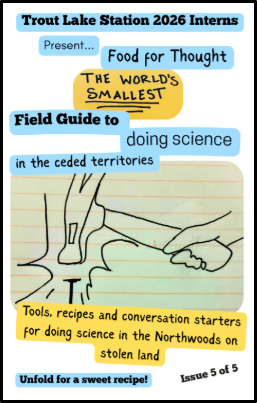
Issue Five: The World’s Smallest Field Guide to Doing Science in the Ceded Territories
Trout Lake Station is built on ceded territory, land that was forcibly signed from the Ojibwe to the U.S. federal government in treaties from 1836, 37, 42, and 54. This zine highlights some key concepts from relevant readings we’ve been talking about, along with some lingering ideas and questions we hope will be passed along to the next round of seasonal employees. Topics include hierarchies of knowledge, how we assign priorities, and collaborative research. Click here for a printable PDF of Issue Five.
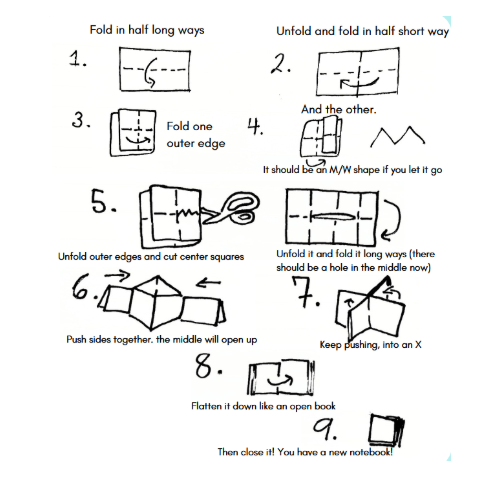
P.S. Folding these field guides is not too hard, but it takes a minute to get the trick. Here are directions, but you can also look up “how to fold a zine” online.
I want to give a huge thank you to Carrie Kissman, my supervisor, for supporting me through these projects and many others. No matter how many snippets of paper I left on her desk, she was always up for another round of edits, and no matter how busy she was, she always made time for another round of mentorship and advice. Thank you.
I’d also like to give a huge thank you to Gretchen Gerrish, for making time for one on one feedback. Gretchen was hugely helpful in ensuring that these zines said what I meant to say. Thank you.
I also have to thank the people who shared their ideas, recipes, edits, and time with me. This project could not have been made without them. They are (but not limited to); Dr. Raymond Allen, Crystal Brown, Jennifer Linden, Rachel Lewis O’Neill, Gianna Dugan, Madeleine Arbuckle, Linda Hang, Greta Moran, and Susan Knight. Thank you.