Fish Lake Exemplifies Ecological Resilience Despite Extreme Change
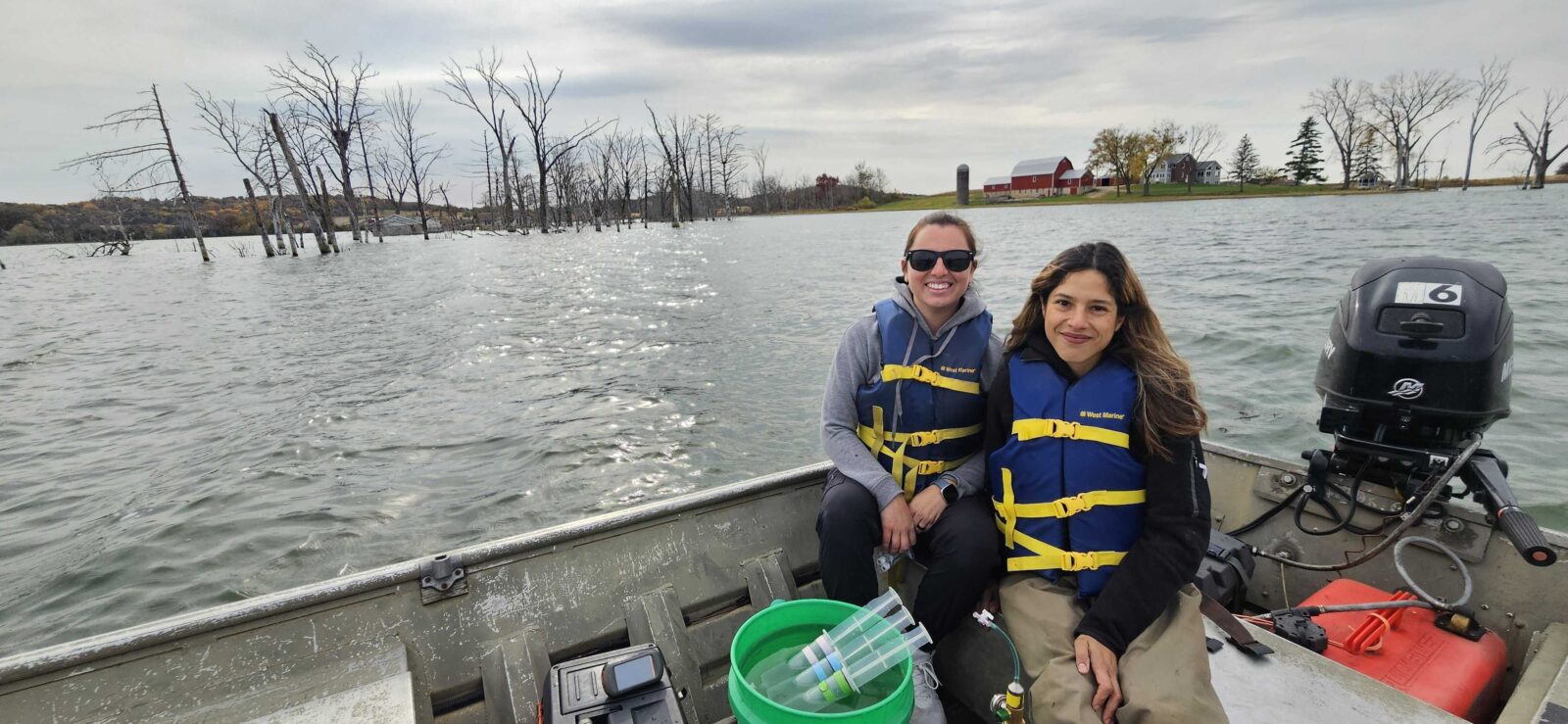
By Helen Schlimm– After Cassie Ceballos first set eyes on Fish Lake in Roxbury, Wisconsin in 2023, she couldn’t quite believe what she was seeing. She was starting out her PhD fieldwork as part of Emily Stanley’s lab at the Center for Limnology (CFL). After four years and some 80 trips to this fascinating place, Cassie has learned a lot about freshwater ecosystem resilience to extreme change.
Cassie and her work on Fish Lake have been highlighted in this blog before, but now she is wrapping up her time at the lake and reflecting on her experiences there.
At the CFL, we are big fans of lakes in general. But what makes Fish Lake such an unusual place to visit and study? It’s all about the water level.
I joined Cassie and Research Specialist Hannah Agner on their final sampling trip to Fish Lake. As soon as we drove up to the lake, located 45 minutes north-west of Madison, something struck me as odd. I am referring to the road, which literally disappears into the depths of the water. Immediately, I noticed a few more things that looked out of place. Trees and houses that used to line the road along the western edge of the lake are now inundated with several feet of water. As we approach the boat launch, tree skeletons emerging from the water drive home the point that something dramatic happened here, and it seems to have happened somewhat recently.
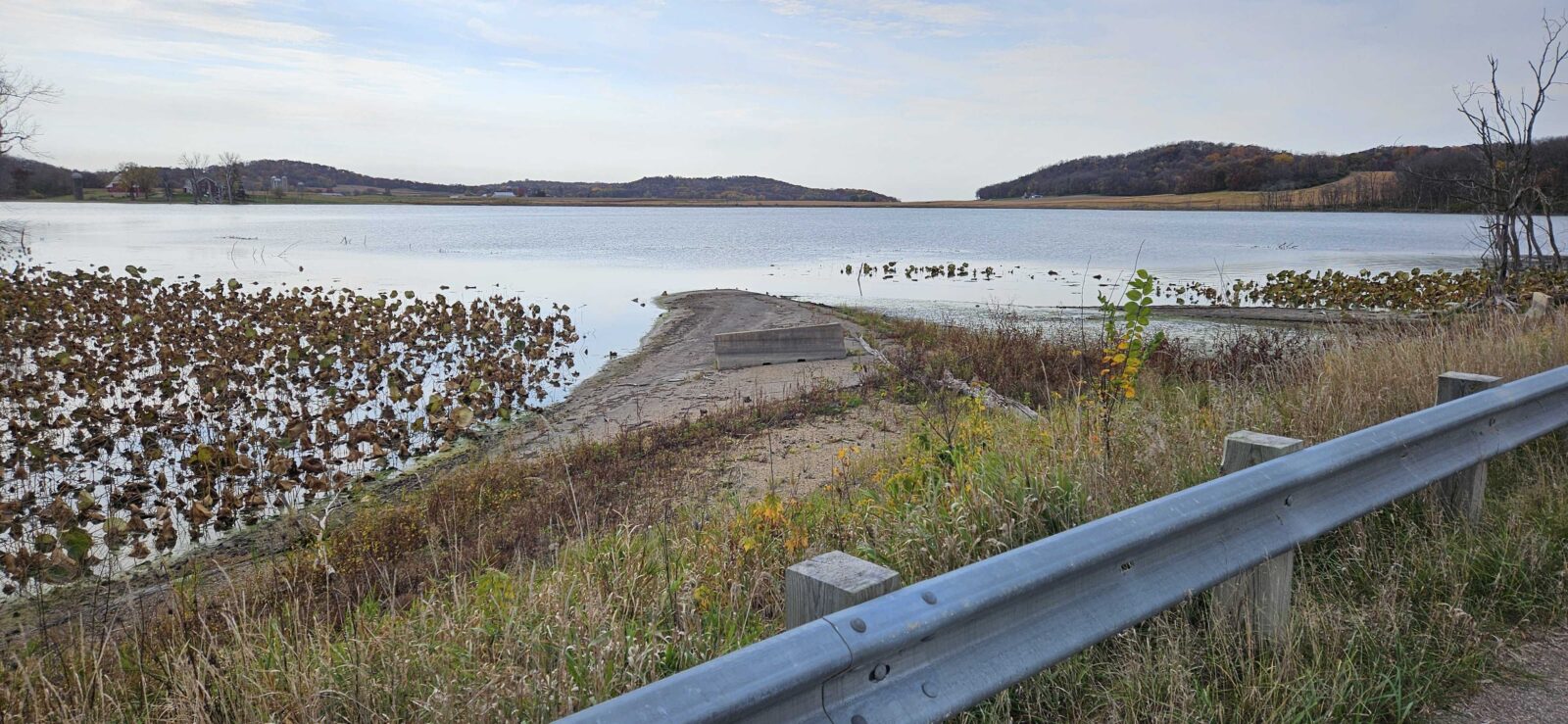
We are seeing the fusion of what used to be two separate lakes, Fish and Mud, but that would not be apparent to the current observer. The water level at Fish Lake has risen nearly 20 feet (more than 6 meters) since the 1970s, with a lot of that change taking place in the last decade or so. Fish Lake is a seepage lake, which means that it is primarily fed by groundwater inputs and does not have a natural outlet. These factors mean that the lake is far more sensitive to changes in water level than drainage lakes (like the Yahara chain of lakes in Madison) that flow into outlets.
It is also the third deepest lake in Dane County at a maximum depth of 21 m (around 70 ft). This uniqueness led Fish Lake to be added to the suite of southern Wisconsin lakes monitored by the North Temperate Lakes Long Term Ecological Research (NTL-LTER) program, housed at the CFL, starting in 1996.
Fish Lake is part of a rural and agricultural watershed that contrasts with the more urban waters of Mendota and Monona in Madison. Additionally, it hosts a complex fishery (hence the name) despite the loss of cisco due to increasing eutrophication over the last couple of decades. Increasing nutrient enrichment has led to water quality impairments that prevent draining the lake to a nearby river to offset the water level rise.
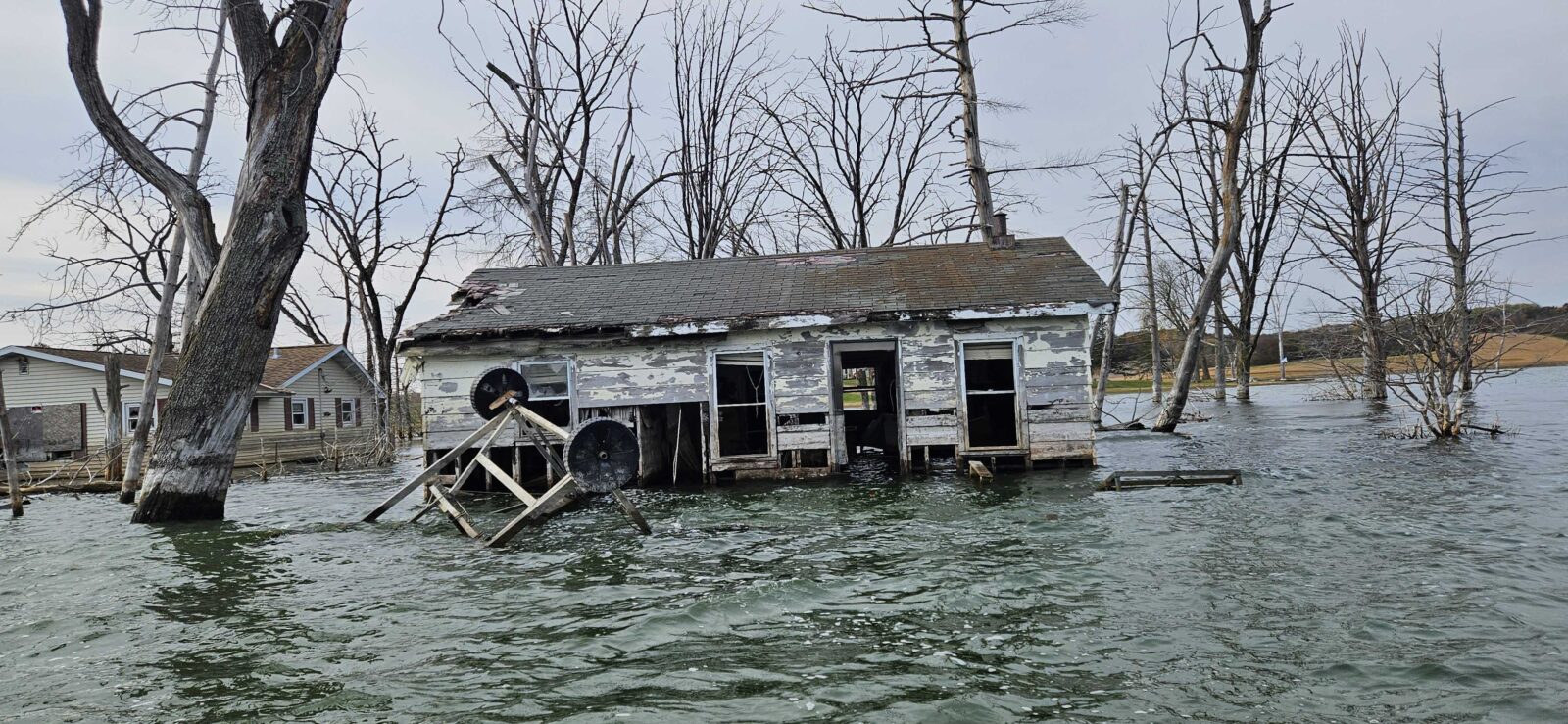
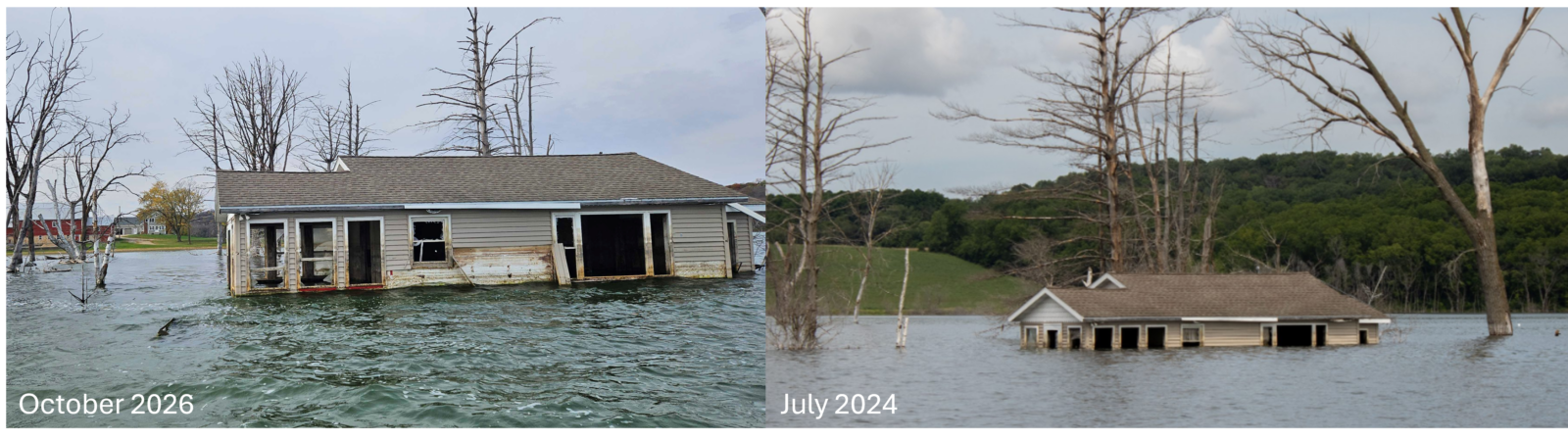
Flooding at Fish Lake has been part of its story for decades. In the early 2000s, a relatively smaller raise in the water level led neighboring homeowners to deploy pumps and the road to be raised. Then, after a remarkably rainy period from 2017-2018, the lake raised an additional half meter. After yet another wet year in 2020 the waters didn’t stop, flooding over the road, into houses, RVs, and farm fields on its quest to join with Mud Lake. The double whammy of overland runoff and groundwater infusion led to a final rise that was fast enough that several houses along the western shore had to be abandoned, the eerie remains of which still can be seen today.
So what does this mean from an ecological standpoint? Since 2020, Fish Lake essentially doubled in size. Much of the land bordering the lake suddenly became submerged, rapidly changing the terrestrial environment into an aquatic one. And the changes have not stopped. While the significant increase has remained, the water level is now going down and expected to continue decreasing due to several dry years. The change from a high precipitation year in 2024 to the current drought conditions is clear when you look at a water level benchmark, like on the side of a partially submerged house.
Cassie’s PhD research has focused on the ecological impacts of this remarkable change in lake level. She is interested in the transformation of the littoral, or near-shore habitat, as the flooding reset the boundaries of the lake. Specifically, she has been studying the macrophyte, or large aquatic plant, communities in the lake and observing how they have adapted along with their changing environment. These primary producers are important parts of lake biology because they provide food, refuge, and oxygen for underwater organisms.
Some aquatic plants like water smartweed have adapted remarkably well to their new surroundings and moved into novel spaces relatively easily. Other macrophytes and periphyton (algae that grows on surfaces) have similarly established themselves in the newly flooded littoral zone. But surveying has shown that as the historic littoral zone deepened, suitable sites for macrophyte colonization and species diversity declined in those regions.
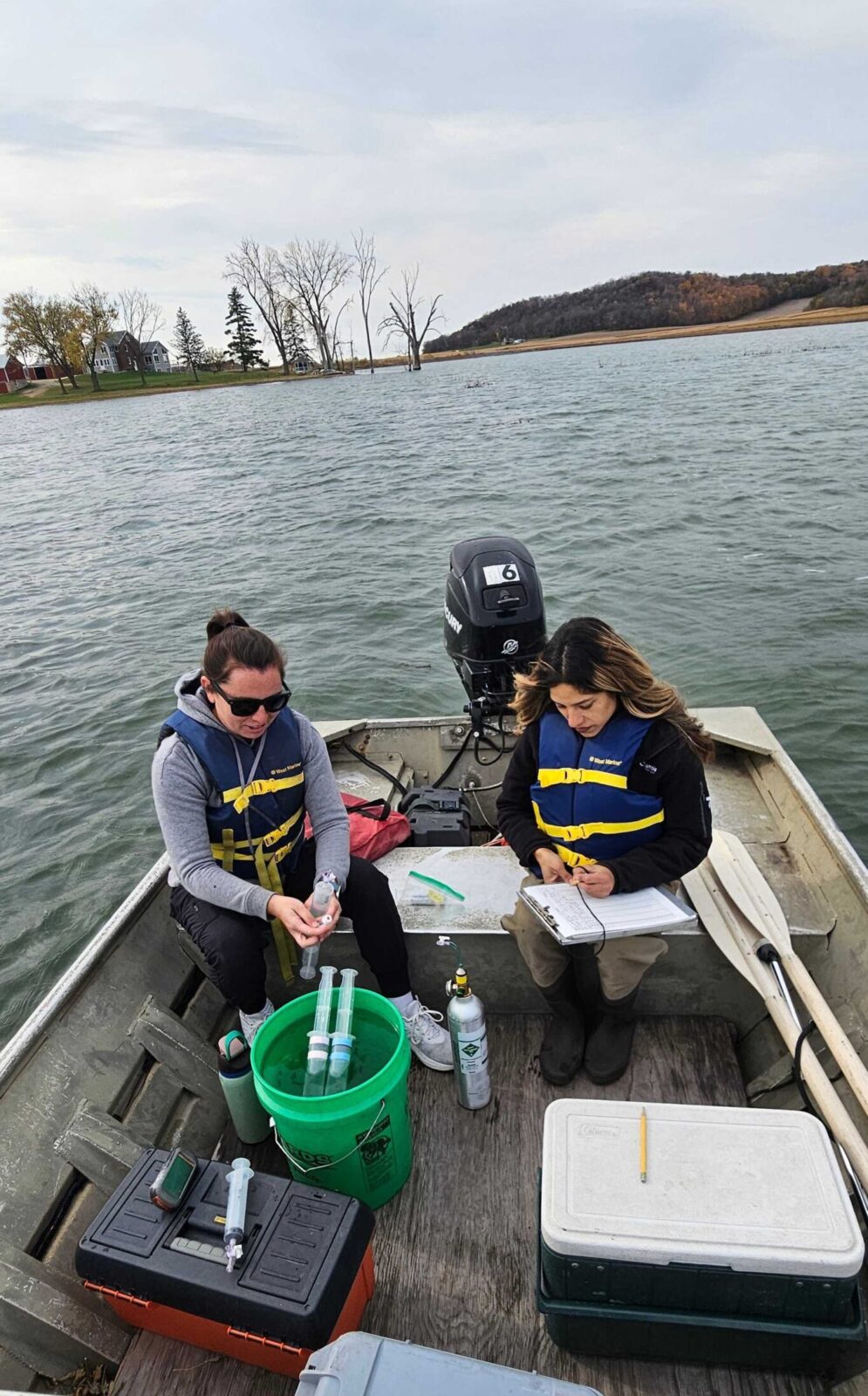
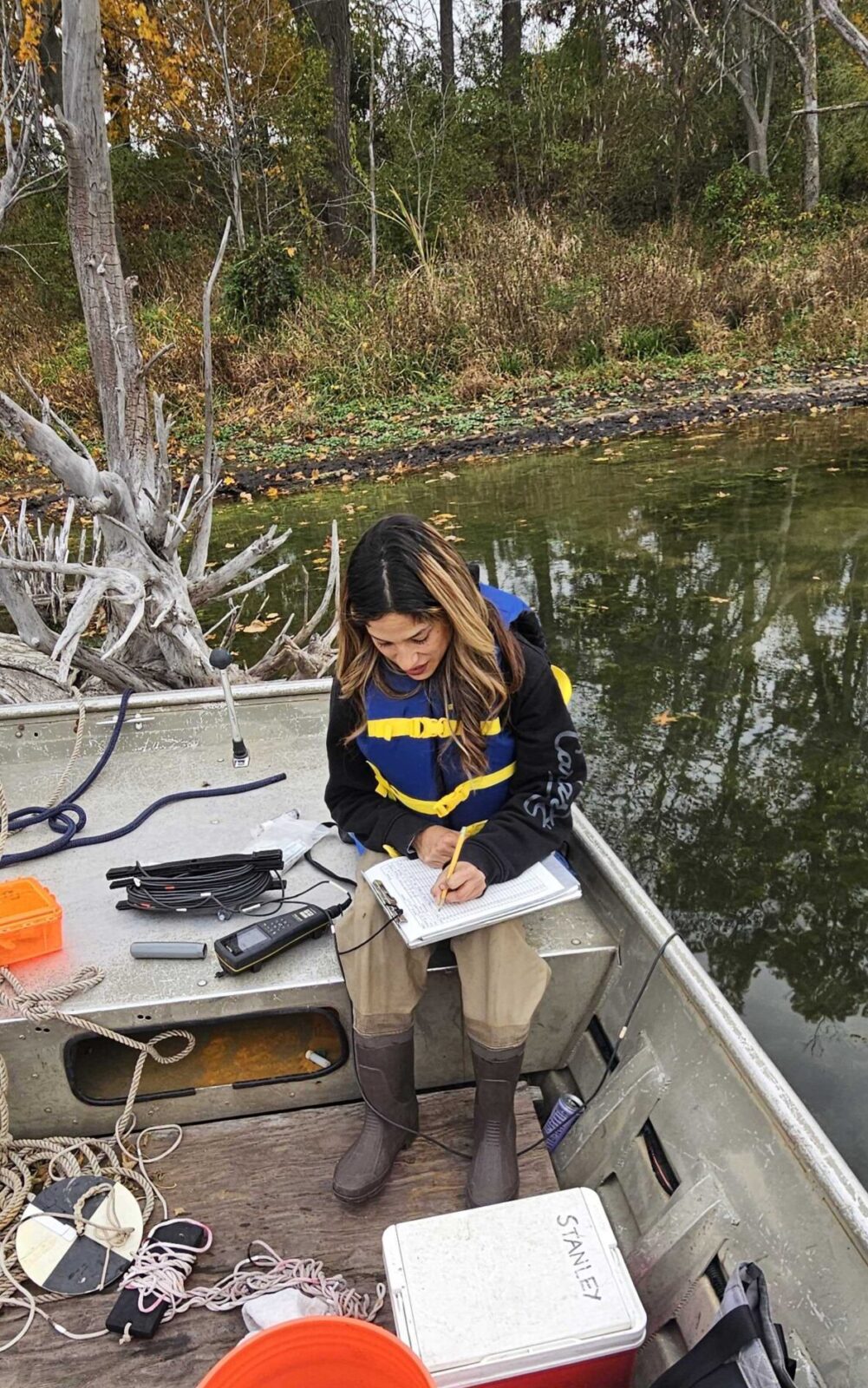
Additionally, Cassie has been measuring greenhouse gases (GHGs) in the lake waters since 2024. The previously terrestrial sediment is rich in organic material from nearby forests and farm fields, which is predicted to increase the production of GHGs in the lake. Cassie has also deployed sensors at buoys located in some littoral zones as well as one in the middle, with the goal of studying whole lake oxygen dynamics (metabolism). The littoral buoys (affectionately named after the Backstreet Bu-oys) measure water temperature, dissolved oxygen, and light.
Seven sites are sampled: several around the littoral zones of the lake, one over the deep hole in the middle, and one over what used to be the road below. Preliminary data suggests differences in oxygen dynamics between the near-shore sites and the deep site, as well as among the various shallower areas.
Aside from the novelty, Fish Lake also has long-term data from NTL-LTER and the Wisconsin Department of Natural Resources. This means that there is a solid foundation to ask ecological questions like how are the various habitats restructuring and what changes will we continue to see?
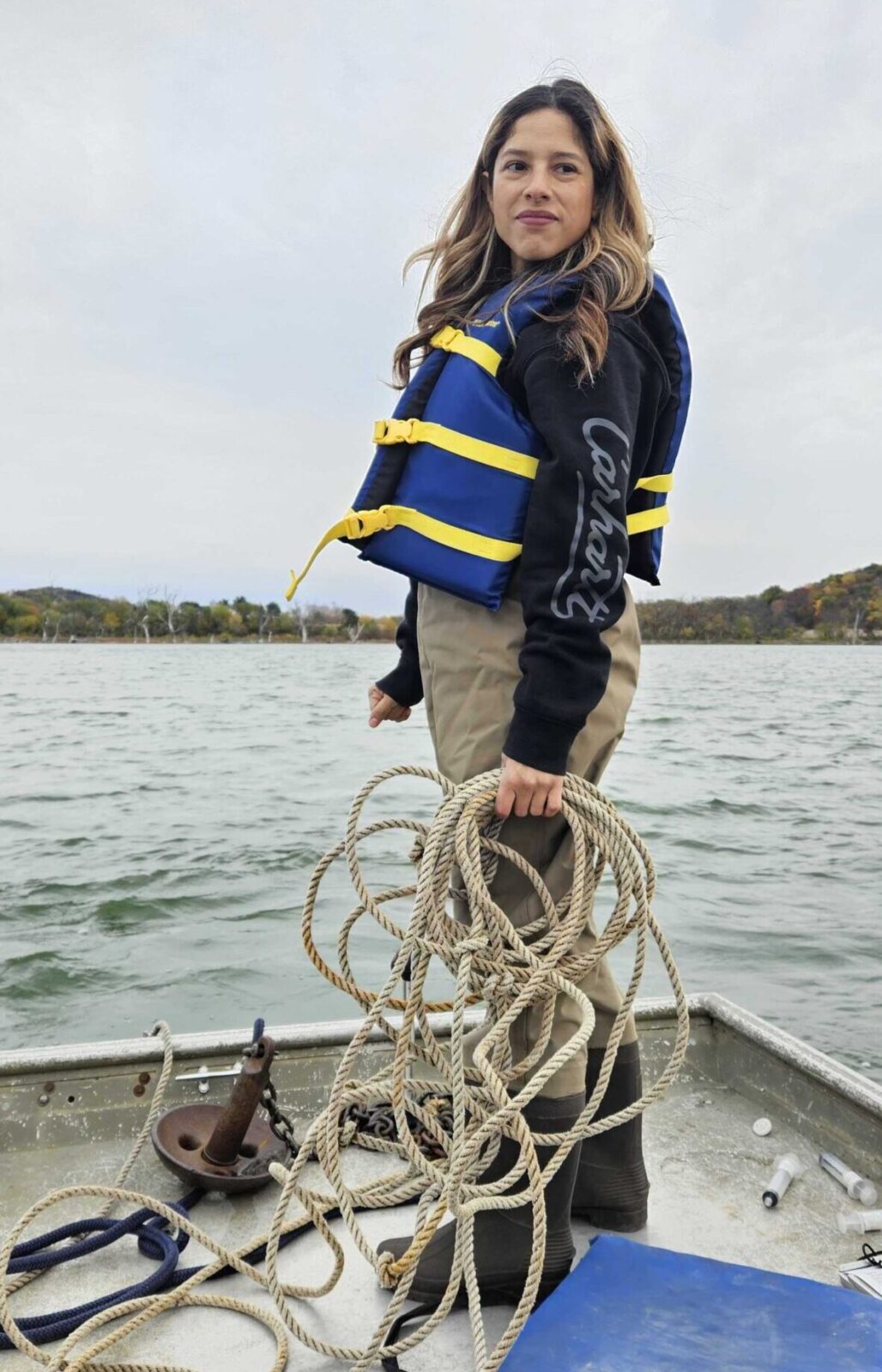
Ultimately, the recent story of Fish Lake is that of ecological resilience to rapid environmental change. Life survived and is finding new ways to hold on. As a researcher documenting these changes, Cassie has most enjoyed surveying the littoral zones for periphyton (aka scraping green growth off of trees, cinderblocks etc.), electrofishing under the light of a supermoon to observe fish communities, and using sonar to survey macrophytes. Wrapping up her fieldwork is a little bittersweet, but she is thankful for all of the experiences and help she has had along the way.
All in all, Cassie and her team of undergraduate interns, plus Hannah and other colleagues, have spent hundreds of hours floating around the ghostly remains of structures, trees, and other unusual findings in Fish Lake over the past four years, with more stories to tell soon.